
Understanding Internal Family Systems (IFS): Parts, Plurality, and the Healing Power of Relationship
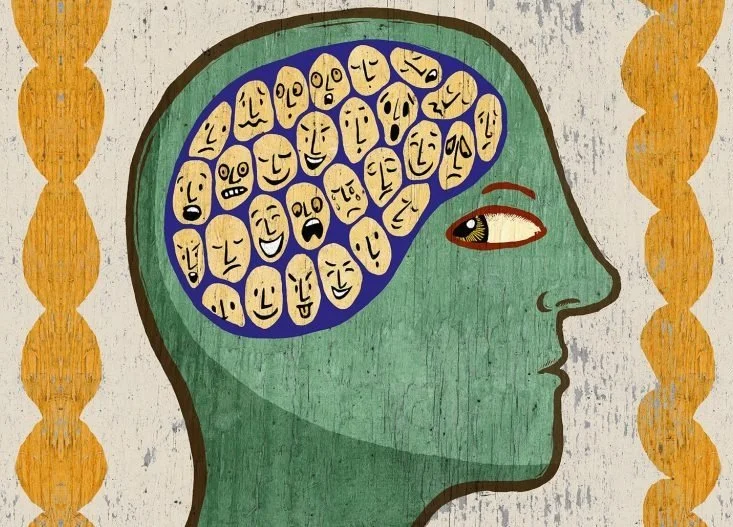
Many people come into therapy saying something like:
“Part of me wants to leave, but part of me is scared.”
“I know better, but another part of me keeps doing this.”
“There’s a voice in my head that won’t let me rest.”
If that sounds familiar, you’re not broken. You’re human.
One of the most compassionate and empowering ways we understand this inner experience in therapy is through Internal Family Systems - a model that views the mind as naturally made up of different “parts,” each with a purpose and a story.
What ARE Internal Family Systems?
Internal Family Systems (IFS), developed by Richard C. Schwartz, is a therapeutic approach based on the idea that we all have multiple inner parts - and that this multiplicity is healthy and normal.
Rather than seeing inner conflict as pathology, IFS understands it as an internal system trying its best to protect us.
At the center of this system is what IFS calls the Self - a grounded, compassionate core that can lead our internal world when parts feel safe enough to step back.
IFS is built on one radical belief:
There are no bad parts.
Even the parts that criticize, numb, avoid, or explode are trying to help in the only ways they know how.
What Does “Parts” Mean?
In IFS, “parts” are distinct aspects of our inner experience. They can carry emotions, beliefs, memories, and roles. You might notice parts as:
An inner critic
A people-pleasing voice
A perfectionist
A protector that shuts down emotionally
A younger part that feels scared or ashamed
Rather than eliminating these parts, therapy focuses on understanding them.
Three Common Categories of Parts in IFS
IFS often describes parts in three broad roles:
1. Managers
These parts try to keep life under control. They may strive for achievement, perfection, approval, or predictability to prevent pain.
2. Firefighters
When overwhelming emotion breaks through, firefighters jump in to extinguish it quickly. This might look like emotional numbing, substance use, binge behaviors, dissociation, or anger outbursts.
3. Exiles
These parts carry old wounds - often from earlier life experiences. They may hold shame, fear, grief, or loneliness.
From a relational perspective, every one of these parts developed in response to experiences - often in relationship. They are not random. They are adaptive.
What Is Plurality?
Plurality is the recognition that we are not a single, fixed personality. We are internally complex. We contain multitudes.
IFS normalizes this. Instead of asking, “What’s wrong with me?” we begin asking, “Which part of me is showing up right now?”
Plurality allows for:
Self-compassion instead of self-judgment
Curiosity instead of shame
Integration instead of internal war
When we stop trying to silence parts and instead listen to them, internal conflict begins to soften.
The Role of the Self
At the heart of IFS is the belief that beneath all protective layers is the Self—a calm, compassionate, connected presence.
The Self is not another part. It’s the grounded center of who you are.
IFS describes the qualities of Self-energy with words like:
Calm
Curious
Compassionate
Confident
Courageous
Clear
Connected
Creative
In therapy, we work toward helping parts trust this Self-leadership.
Healing happens when protective parts no longer have to work so hard - and wounded parts finally feel heard.
How IFS Works in Therapy
IFS therapy is relational at its core. While we explore your internal system, we are also building a safe therapeutic relationship where parts can show up.
A session might involve:
Noticing which part is activated
Getting curious about its fears and intentions
Understanding when it first took on its role
Helping it feel appreciated rather than shamed
Gently accessing the vulnerable parts it protects
Nothing is forced. We don’t push past protectors. We build trust internally, just as we would externally.
Many clients describe IFS as less confrontational and more collaborative than other approaches. Instead of battling symptoms, we build relationships - with ourselves.
Why IFS Can Be So Powerful
IFS can be especially helpful for:
Trauma and attachment wounds
Chronic self-criticism
Anxiety and emotional reactivity
Shame and identity confusion
Repeating relational patterns
Because many of our parts were shaped in early relationships, healing often requires a corrective relational experience - both within therapy and internally.
When a once-exiled part is finally met with compassion instead of rejection, something shifts. The nervous system softens. The internal world becomes less chaotic.
We move from fragmentation toward integration.
A Relational Lens on Parts Work
From a relational perspective, our internal system mirrors our relational experiences.
If you grew up needing to be perfect to feel safe, a strong manager part makes sense.
If vulnerability was unsafe, a shutdown part makes sense.
If anger was punished, an exiled angry part makes sense.
IFS doesn’t pathologize these adaptations. It honors them.
And in the therapy relationship, we model something new:
Curiosity instead of criticism
Boundaries without shame
Accountability with compassion
Repair after rupture
Over time, your internal system begins to mirror this relational safety.
Common Misunderstandings About IFS
Let’s gently clear up a few myths:
It is not multiple personality disorder. Plurality in IFS is a normal human experience.
It is not about “getting rid” of parts. It’s about helping them relax into healthier roles
It is not blaming parents or caregivers. It’s about understanding adaptive survival strategies.
It is not bypassing responsibility. You remain accountable for your actions, even as you understand the parts involved.
IFS is about integration - not fragmentation.
What It Might Feel Like
Clients often say IFS work feels:
Grounding
Gentle but deep
Emotional in an unexpected way
Clarifying
Relieving
Sometimes there are tears. Sometimes there is laughter at recognizing a familiar inner voice. Often, there is a sense of finally making sense of yourself.
You are not “too much.”
You are not inconsistent.
You are not failing at being a person.
You are internally complex.
Internal Family Systems offers a framework that honors that complexity. It invites curiosity instead of criticism. It assumes that every part of you has a reason for being here.
And in a safe therapeutic relationship, those parts don’t have to carry their burdens alone anymore.
If you’re curious about exploring parts work or Internal Family Systems in therapy, consider reaching out to a mental health professional trained in IFS. Healing begins not by silencing parts, but by listening to them.
