
Anxiety and Depression: Why They Often Show Up Together - Especially for Neurodivergent People
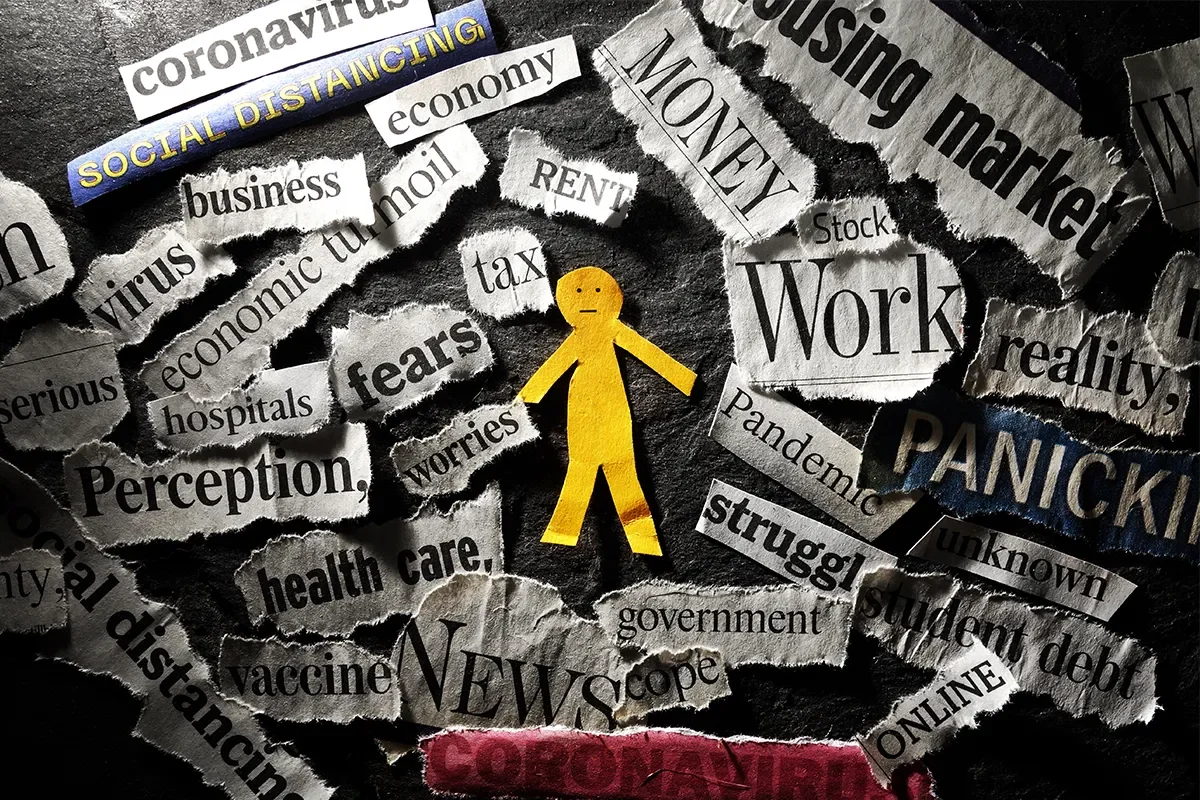
People often talk about anxiety and depression as if they are opposites. Anxiety can feel fast, restless, and overwhelming. Depression can feel slow, heavy, and numb.
But in real life, many people experience both at the same time - sometimes even within the same day.
You may find yourself lying awake with a racing mind one week, then struggling to get out of bed the next. You may constantly overthink conversations, responsibilities, or sensory input until your system becomes exhausted and shuts down completely.
This is especially common for neurodivergent individuals, including people with ADHD, autism, sensory processing differences, trauma histories, or nervous systems that process the world more intensely.
Understanding how anxiety and depression interact can help reduce shame and create more compassion for what your nervous system may actually be trying to communicate.
Anxiety and Depression Are Different, But Connected
Anxiety often lives in anticipation. Thinking “What if something goes wrong?”, “I need to stay on top of everything", or "I can’t relax yet.”
Where depression often emerges when the nervous system becomes depleted, overwhelmed, disconnected, or hopeless. It may sound more like: “I can’t do this", “What’s the point?”, “Everything feels heavy” or “I just want to disappear for a while.”
For many people, chronic anxiety eventually becomes exhausting. A nervous system that spends too long in hypervigilance or survival mode can eventually “crash” into shutdown, numbness, fatigue, or depression.
This is not laziness or weakness.
It is often a nervous system that has been trying to survive for too long without enough safety, support, regulation, or recovery.
The Window of Tolerance
One framework that can help explain this experience is the “window of tolerance.”
The window of tolerance refers to the window where your nervous system is able to function with relative balance. Within this window, you can usually think clearly, feel emotions without becoming overwhelmed, stay connected to yourself and others, and respond to stress more flexibly.
When stress, sensory overload, masking, trauma triggers, burnout, or emotional demands exceed your capacity, the nervous system can move outside that window.
Some people move into hyperarousal, which may look like anxiety, panic, racing thoughts, irritability, restlessness, perfectionism, and hypervigilance.
Others move into hypoarousal, which may look like depression, shutdown, numbness, exhaustion, dissociation, isolation, and difficulty initiating tasks.
Many people cycle between both states. They suddenly feel emotionally flat, depleted, and unable to engage.
This fluctuation can feel confusing, especially when others only see fragments of the experience.
Neurodivergency and Nervous System Overload
Neurodivergent people often navigate a world that was not designed with their nervous systems in mind.
This can create chronic stress that accumulates quietly over time. This can look like sensory overwhelming, social masking, executive functioning strain, rejection sensitivity, difficulty transitioning between tasks, internalized shame, constant self-monitoring, and burnout from trying to “keep up” can all narrow the window of tolerance.
Many neurodivergent adults learned early that they needed to work harder, hide their differences, or push through discomfort to be accepted. Over time, this can create an ongoing state of nervous system activation.
Eventually, anxiety and depression may become less about “what’s wrong with you” and more about what your system has been carrying for a very long time.
You Do Not Need to Earn Rest
One of the painful patterns we often see in therapy is people waiting until they completely collapse before allowing themselves care.
Especially for high-masking or high-achieving individuals, anxiety can become the force that keeps life functioning - until it no longer can.
Healing is not about becoming productive enough to deserve rest.
It is about learning to notice your nervous system before overwhelm turns into shutdown.
Sometimes that means creating more sensory regulation, reducing masking where possible, building realistic expectations, learning emotional regulation skills, processing trauma, practicing self-compassion, identifying burnout earlier, andallowing support and connection.
Therapy can help create space to understand these patterns with curiosity instead of criticism.
A More Compassionate Perspective
If you experience both anxiety and depression, there may not be something “contradictory” happening inside you.
Your nervous system may simply be moving between states of activation and depletion in response to stress, overwhelm, invalidation, trauma, or chronic adaptation.
You are not failing because coping has become harder.
You may simply need support that honors the complexity of your experience, especially if you have spent years trying to push yourself through it alone.
Healing often begins not with forcing yourself to function differently, but with understanding your nervous system more gently. And if you need help reach out to us today.
