
Thought Challenging and Affirmations: Practicing a More Balanced Inner Dialogue
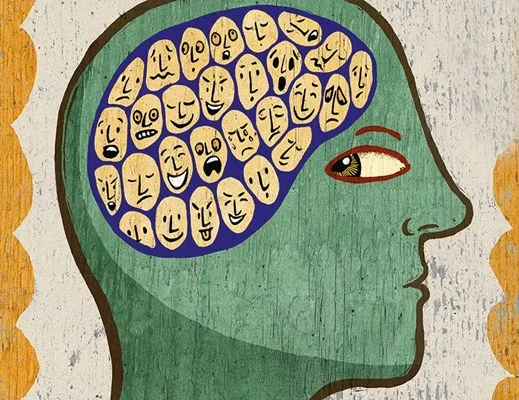
The thoughts we have throughout the day can shape how we understand ourselves, our relationships, and the experiences around us. When we are stressed, anxious, overwhelmed, or discouraged, our thoughts can sometimes become more critical or absolute. We may find ourselves thinking, “I always get things wrong,” “I should be able to handle this,” or “Nothing is ever going to change.” Although these thoughts can feel very real in the moment, they are not always an accurate reflection of the full picture.
From a Cognitive Behavioral Therapy (CBT) perspective, learning to notice and challenge unhelpful thought patterns can be an important part of developing emotional awareness and healthier coping skills. Thought challenging is not about forcing ourselves to think positively or convincing ourselves that difficult circumstances do not exist. Instead, it involves slowing down, examining the thought, and considering whether there may be a more balanced and compassionate way to understand the situation.
One of the first steps is simply noticing the thought. This can be more difficult than it sounds because many thoughts happen automatically. A stressful interaction, mistake, disappointment, or uncertainty can quickly lead to an interpretation before we have had an opportunity to pause. Developing awareness of these automatic thoughts allows us to create some distance between what we think and what we know.
For example, imagine someone sends a message to a friend and does not receive a response. An automatic thought might be, “They must be upset with me.” That thought may lead to anxiety, repeated checking of the phone, or withdrawing from the relationship. Thought challenging invites us to pause and ask whether there is evidence that supports the thought and whether there is evidence that does not. There may be many alternative explanations: the person may be busy, working, sleeping, driving, or simply have not seen the message.
The goal is not to replace every negative thought with an overly positive one. A more balanced thought might be, “I do not know why they have not responded yet. I feel anxious about it, but I can give them some time and avoid assuming the worst.” This thought acknowledges the emotion while leaving room for uncertainty and alternative explanations.
This is where affirmations can become particularly helpful. Healthy affirmations can reinforce balanced, compassionate beliefs that we want to practice. Rather than serving as statements we must convince ourselves to believe immediately, affirmations can act as reminders of the perspective we are working toward.
For someone struggling with perfectionism, an affirmation might be, “I can make mistakes and still be worthy of compassion.” Someone experiencing a difficult transition might practice, “I do not have to have everything figured out today.” A person who tends to doubt themselves might use, “I can trust myself to take the next step, even when I feel uncertain.”
The most effective affirmations tend to feel personally meaningful and realistic. If a statement feels completely disconnected from your current experience, it may be difficult to accept. For example, someone who feels overwhelmed may find “Everything is wonderful” unhelpful. A statement such as “This is a difficult moment, and I can take it one step at a time” may feel more authentic and supportive.
Journaling can provide a practical way to bring thought challenging and affirmations into everyday life. Consider setting aside a few quiet minutes and writing about a recent situation that brought up a strong emotional response. Begin by describing what happened and then write down the automatic thought that came to mind. Next, explore the evidence that supports that thought and the evidence that may challenge it. Ask yourself whether you might be making an assumption, viewing the situation in all-or-nothing terms, predicting the future, or judging yourself more harshly than you would judge someone you care about.
Then ask yourself, “What is a more balanced way of looking at this situation?” Write a response that acknowledges what is difficult while also recognizing your strengths, resources, choices, and areas of uncertainty. Finally, create one affirmation based on that balanced perspective. You might complete the journal entry with the question, “If someone I deeply cared about were experiencing this same situation, what would I want them to remember about themselves?”
With practice, this process can become less about correcting every thought and more about developing a different relationship with your internal dialogue. We all have automatic thoughts, and experiencing a critical or anxious thought does not mean that we have done something wrong. What matters is learning to notice those thoughts and decide whether they deserve to be accepted, questioned, or reframed.
For parents and caregivers, these skills can also be modeled for children and adolescents. Saying, “I noticed I was telling myself I couldn't do this, so I'm going to slow down and think about what I actually know,” demonstrates that thoughts can be examined rather than automatically believed. This creates an opportunity to normalize mistakes, uncertainty, and emotional experiences while encouraging flexible thinking.
Thought challenging and affirmations are not substitutes for professional mental health care when someone is experiencing significant or persistent distress. However, they can be useful skills to explore in counseling and incorporate into daily life. A mental health professional can help individuals identify patterns of thinking, understand the relationship between thoughts and emotions, and develop strategies that are appropriate to their circumstances.
Our thoughts can influence how we experience the world, but a thought is not always a fact. Learning to pause, question, and respond with greater balance can create space for self-compassion and meaningful change. With patience and practice, we can begin to replace an automatic inner critic with a more thoughtful and supportive voice—one that recognizes both the challenges we face and our capacity to meet them.
